
To travel through Botswana is to move through living stories; tales written not on pages, but in the language of rivers, dunes, and rocks. This is a country of contrasts, where every shift in the horizon reveals a new chapter of nature’s design.
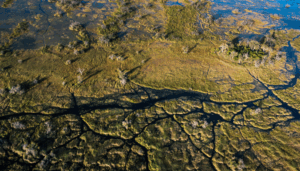
Begin your journey in the northwest, where the Okavango River defies all logic by spilling into the desert instead of the sea. Its waters fan out into the Okavango Delta; a UNESCO World Heritage Site and the world’s largest inland delta, turning arid sands into a vibrant wetland alive with elephants, hippos, and fish eagles.
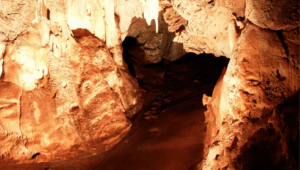
Nearby, the dolomite ridges of Aha, Gcwihaba, and Koanaka Hills rise from the sandveld, concealing beneath them the mysterious Gcwihaba Caves. Inside these ancient caverns, time seems to pause; stalactites, stalagmites, and soda straws hang like delicate sculptures, preserved in silence.
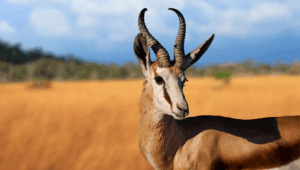
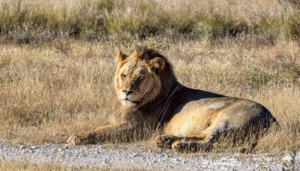
Heading southwest, the land transforms again. Greens give way to ochres, and the vast red dunes of the Kgalagadi stretch into the distance. Here, within the Kgalagadi Transfrontier Park — Africa’s first cross-border park, gemsboks and springboks stand motionless in the heat while black-maned lions patrol the desert plains, a reminder that even the harshest landscapes pulse with life.
Farther east lies the immense Central Kalahari Game Reserve (CKGR), a sea of grass and acacia stretching to the horizon. This land, one of Africa’s largest protected areas, carries a quiet dignity — shaped by wind, wildlife, and the ancient footsteps of our San communities, who read the land like a sacred script.
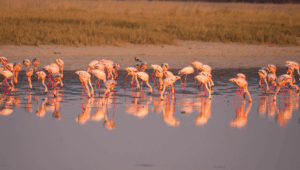
As you move northeast, the desert opens into the shimmering Makgadikgadi and Nxai Pans; remnants of an ancient lake that once covered much of the region. In the dry season, these vast salt pans mirror the sky in blinding white; when the rains fall, they awaken into wetlands filled with flamingos and the thunder of migrating zebras. Standing nearby, the iconic Baines’ Baobabs watch over the scene — silent witnesses to centuries of change.
Journeying eastward, the terrain softens into the hardveld; a land of gentle hills, rocky outcrops, and fertile fields. Here, villages and farms dot the landscape, and daily life unfolds in rhythm with the land. The soil slopes gently toward the Limpopo River, whose quiet flow marks Botswana’s southeastern edge and connection to the wider world.
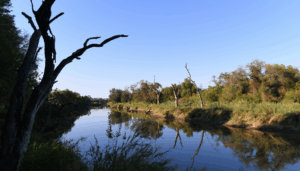
Then, turning north, the country blooms once more into the lush floodplains and woodlands of Chobe. The Chobe River glows at sunset, reflecting herds of elephants and buffaloes gathered along its banks. Chobe National Park, one of Botswana’s crown jewels, captures the essence of abundance — a harmony between water, wildlife, and wilderness.
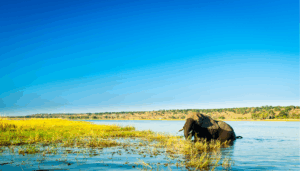
By journey’s end, one truth becomes clear: Botswana is not one landscape, but many; each seamlessly blending into the next, each telling a part of an eternal story. From the stillness of Gcwihaba’s caves to the golden waters of Chobe, this is a land that invites you to listen, to breathe, and to witness nature’s quiet brilliance.