
For generations, Batswana have lived in rhythm with nature; guided not by written laws, but by stories, customs, and respect for the land. Our forefathers understood that the earth gives, but must also be cared for. Through totems, taboos, and sacred places, they built quiet systems that protected wildlife and preserved harmony between people and nature. Though these practices were never labeled as “conservation,” they carried the same spirit; to keep balance, to protect, and to remember.
Over generations, these customs became more than just ways of life — they became nature’s quiet guardians. Totems taught people to honor and protect certain animals, ensuring their survival; taboos guided when and how plants and animals could be used, preventing waste and overharvesting; and sacred sites created pockets of untouched wilderness, where wildlife and vegetation could thrive. In this way, belief, respect, and tradition wove together a living system of stewardship, where people and nature existed in harmony. Though unseen by the eyes of modern law, these practices quietly conserved Botswana’s landscapes and biodiversity, long before the word “conservation” reached the ears of our forefathers.
Totems: a special bond with nature
Across Botswana, many tribes share a special bond with a particular animal; their totem. These animals are not merely symbols; they are kin. To harm one is to harm the spirit of your people.
Bangwato, whose totem is phuti (duiker), tell of how this small, agile antelope once saved Kgosi Kgama from an enemy ambush — and in gratitude, it was never again to be hunted by his people. For Bakgatla, the kgabo (monkey) became a totem after a miraculous rescue during the Mfecane wars. When escape seemed impossible, a monkey showed their ancestors how to cross a river safely — a story that lives on in reverence and in name.
Even today, elders are affectionately addressed by their totems: Kwena, Phuti, Tholo, Nare. Through these greetings runs an unspoken reminder — that people and animals share lineage, memory, and protection.
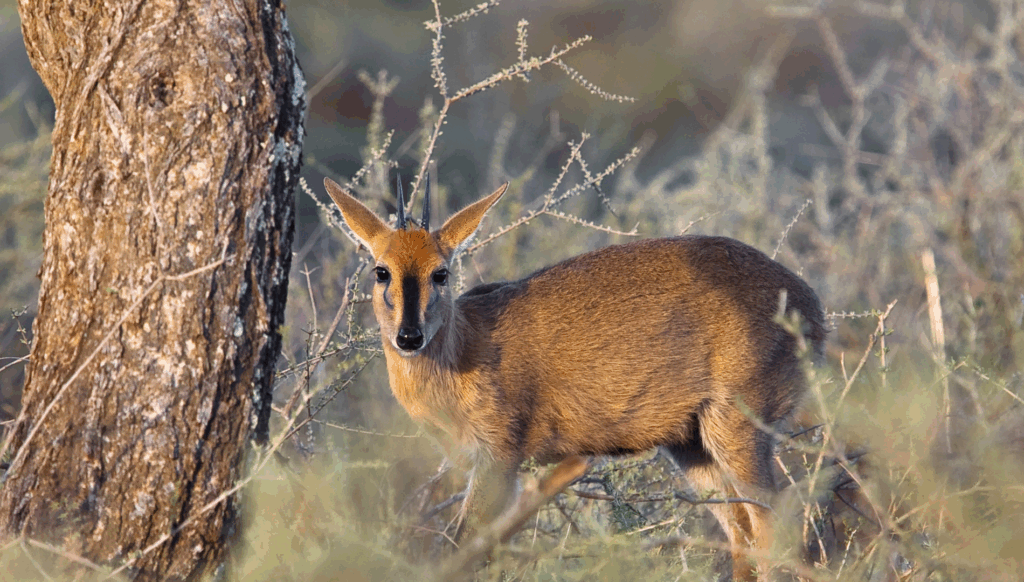
Phuti (Duiker); a living symbol of the Bangwato tribe’s bond with nature.
Taboos: The unwritten laws of nature
Taboos, those quiet, unwritten rules — once shaped how communities harvested plants, hunted, or gathered. They were cultural wisdom in disguise, teaching restraint and respect.
Among the Bamalete and Bakgatla, the Mokgalo (Buffalo thorn) tree was never cut for firewood, its twin thorns believed to ward off evil and guard the resting spirits of the dead. Mokolwane (Fan palm) tree, cherished by the Bayeyi and Hambukushu, could only be harvested carefully — just a few young leaves from each plant, leaving the mature palms standing tall to shade future generations.
In animal lore, taboos ensured the rhythms of nature were not broken. The leopard could only be hunted by royal decree, and impalas were spared during Diphalane/Phalane (the month October) ; their breeding season — a cultural pause that mirrored modern wildlife protection laws.
Each taboo carried a moral, and together, they kept the land in balance.

Sacred Sites: where nature holds the unseen
Across Botswana, certain landscapes are whispered about; places said to belong to the ancestors, or to spirits older than memory itself. People tread lightly there. They do not cut, burn, or disturb, and in doing so, they protect.
One such place is Lentswê la Baratani, the “Hill of Lovers” in Otse. Legends tell of two lovers who vanished into the rock when denied the right to be together. For generations, it was taboo to point at or climb the hill — and so, untouched, the vegetation and wildlife around it flourished.
Picture of lentse la baratani
Likewise, Goo Moremi Gorge holds incredible heritage. Nestled within the Tswapong Hills east of Palapye, Goo Moremi Gorge is where water carves stories into stone. The gorge is more than a natural wonder; it is a sacred home to ancestral spirits, believed to guard both the land and its people. Local communities long treated the gorge with deep reverence. People approached it for rituals, blessings, or guidance, but never with greed or disregard. Such cultural protection has preserved its rare ecology; lush fig trees, nesting Cape vultures, baboons, and crystal pools that stay alive even in the dry season. Today, Goo Moremi remains one of the living examples of how indigenous reverence and modern conservation can flow together. The community-managed Moremi-Manonnye Conservation Trust continues that stewardship, ensuring that both the unseen and the seen remain undisturbed.
Such sacred sites, though bound in the tradition, have become sanctuaries of both faith and ecology.
From totems to taboos, from sacred groves to spiritual hills, Botswana’s heritage holds a map — an ancient blueprint for caring for the natural world. Our forefathers may not have spoken of “ecosystems” or “biodiversity,” but they lived those principles every day.
As we face modern environmental challenges, these traditions remind us that conservation is not only about protecting nature — it is about remembering our place within it. The land has always taught us; our task is to listen.